
Upper Macungie City Directory Collections
There is no verified, continuous township-only commercial directory run. The strongest nearby collection is at the Allentown Public Library microfilm department. It holds Allentown City Directories for 1860 through 1980, plus Morning Call material and federal census films. A volume can be valuable when its own scope includes a township address, a former postal place, or a related business or family lead. It is not safe to relabel the whole shelf as an Upper Macungie directory.
| Collection | Years | Where held | Access and township relevance |
|---|---|---|---|
| Allentown City Directories | 1860–1980 | Allentown Public Library microfilm | Check each volume’s city or suburb coverage before using an entry as township evidence. |
| Morning Call Obituaries Index | 1895–1983 | Allentown Public Library | An index lead; retrieve the notice from the newspaper microfilm. |
| Allentown Morning Call | 1895–present | Allentown Public Library microfilm | Useful for dated notices and local context, with identity verification. |
| Federal census films | 1800–1930 | Allentown Public Library | A dated household and place snapshot; verify the township enumeration district. |
| Lehigh County microfilm | Varies by record group | Pennsylvania State Archives | Use the Lehigh guide to identify office, roll, and date before a visit. |
| Research-library collections | Years not published online | Lehigh Valley Heritage Museum | Ask staff about county, suburban, reverse-directory, church, and cemetery material. |
The library’s microfilm holdings page is the source for this collection image. It shows the concrete regional access point behind a careful Upper Macungie archive search.
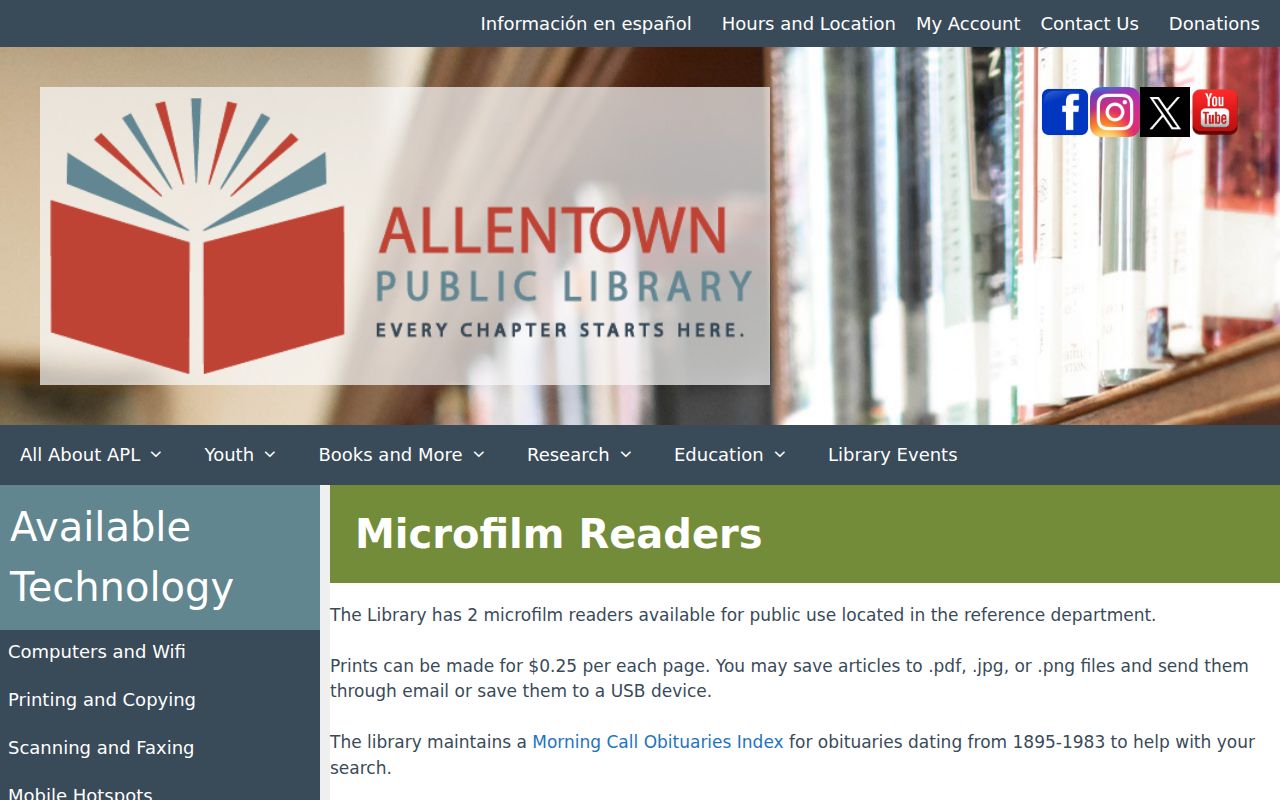
Start with the collection title and its stated scope. That note prevents a useful regional source from becoming an overbroad claim about every township address.
Allentown Volumes Need Scope Checks
A directory title, a postal city, and a township boundary are different things. Upper Macungie addresses can use Breinigsville, Fogelsville, Trexlertown, Orefield, Allentown, or Mertztown as postal-place terms. A volume labeled Allentown may include a particular suburb in one edition and not in another. Test the publisher’s geographic statement, then search the exact place, address form, and surname variant. If the locality is absent, the right result is a coverage limit, not a conclusion that the person or address did not exist.
The same caution applies to a reverse or criss-cross section. A street listing is only useful once the volume has been shown to include that street. For a current, parcel-keyed address trail, use the Upper Macungie street directory route through Lehigh Assessment and GIS rather than stretching a historical book beyond its stated coverage.
Upper Macungie City Directory Entries
No digitized APL directory page was captured for a truthful local transcription. A good reading method therefore begins with the actual printed key in the volume. Preserve the surname and given name, spelling, spouse or widow notation when printed, stated occupation, residence address, business address, ownership notation if the edition uses one, and the abbreviation key. An alphabetical entry answers where a named person was listed. A street section answers which listed person appears at a particular address. Neither establishes every member of a household.
| Name and spelling | Record it as printed, including initials or a former-surname clue. |
|---|---|
| Address | Keep the number, street spelling, and any district or postal wording exactly as shown. |
| Occupation or place | Use it as a dated identifying detail, not as proof of a current connection. |
| Spouse or widow notation | Preserve the mark and compare it with an obituary, probate, or vital source. |
| Ownership notation | Use the edition’s own abbreviation key; do not assume a symbol means the same thing in every year. |
- Criss-cross directory
- A street-order section that can lead from an included address to a listed name.
- Householder index
- An arrangement focused on a household head or listed resident, which may omit other people at the address.
- Abbreviation key
- The volume’s explanation of its marks and shortened terms. Photograph or note it before interpreting entries.
Upper Macungie Directory Companions
The Morning Call Obituaries Index is a particularly useful companion to a directory search. It covers 1895 through 1983 at APL, but it points to the newspaper rather than replacing the obituary text. Find the index lead, retrieve the notice on microfilm, and compare names, dates, relatives, and place wording with the directory year. A move or disappearance from a directory can then be tested against a dated notice, county estate record, or another historical source.
This comparison is more reliable than treating one listing as a complete biography. Directory entries can be brief and a newspaper notice can identify relatives or timing, but both require a match to the same person and time period. Note: Preserve the index citation and the newspaper page together so the lead can be verified later.
Upper Macungie Directory Archives
The Lehigh Valley Heritage Museum is the county-history fallback when a library microfilm run does not answer the question. Its Scott Andrew Trexler II Research Library and Archive is at 432 W. Walnut Street in Allentown. The museum describes research-library access Tuesday through Thursday from 10 a.m. to 4 p.m.; Friday research visits need an appointment at least 24 hours ahead, and the archives are unavailable Friday. Call 610-435-1074 with a targeted request for Upper Macungie, Breinigsville, Fogelsville, or Trexlertown material and a specified record type.
The museum’s official access page is the source for the image below. It confirms a staffed research-library route, but does not publish a complete city-directory shelf or a reverse-directory year run. Ask an archivist before claiming a particular volume exists.
Bring name variants, approximate years, prior street or route, postal-place alternatives, and a short collection list. A source log should record the repository, volume or reel, page, and access date.
State Archives, Not a Home Database
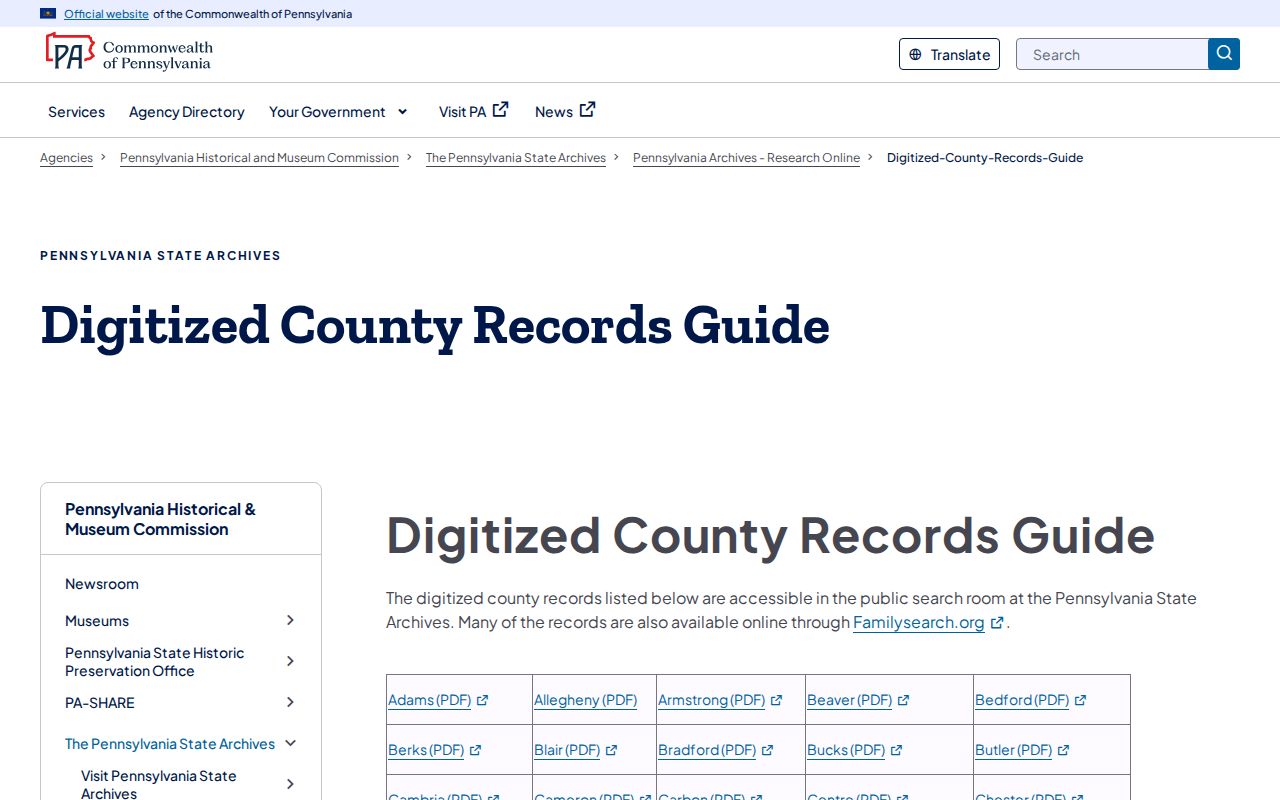
The Pennsylvania State Archives Digitized County Records Guide provides a different bridge. Its Lehigh County PDF identifies county-government record groups and microfilm rolls for use in the public search room, and the Archives notes that many records are also available through FamilySearch. That does not mean every roll has a remote image or a name index. Identify the office, record type, year range, and roll before making the trip or requesting access conditions.
The State Archives guide is the source for the image below. It is especially helpful after an online county database ends, because it directs research toward a specific physical record group rather than a generic web search.
For family-history context, the Archives’ birth-record guide is another official reminder that record age and custodian control access. The image below links that state route to the broader archival workflow.
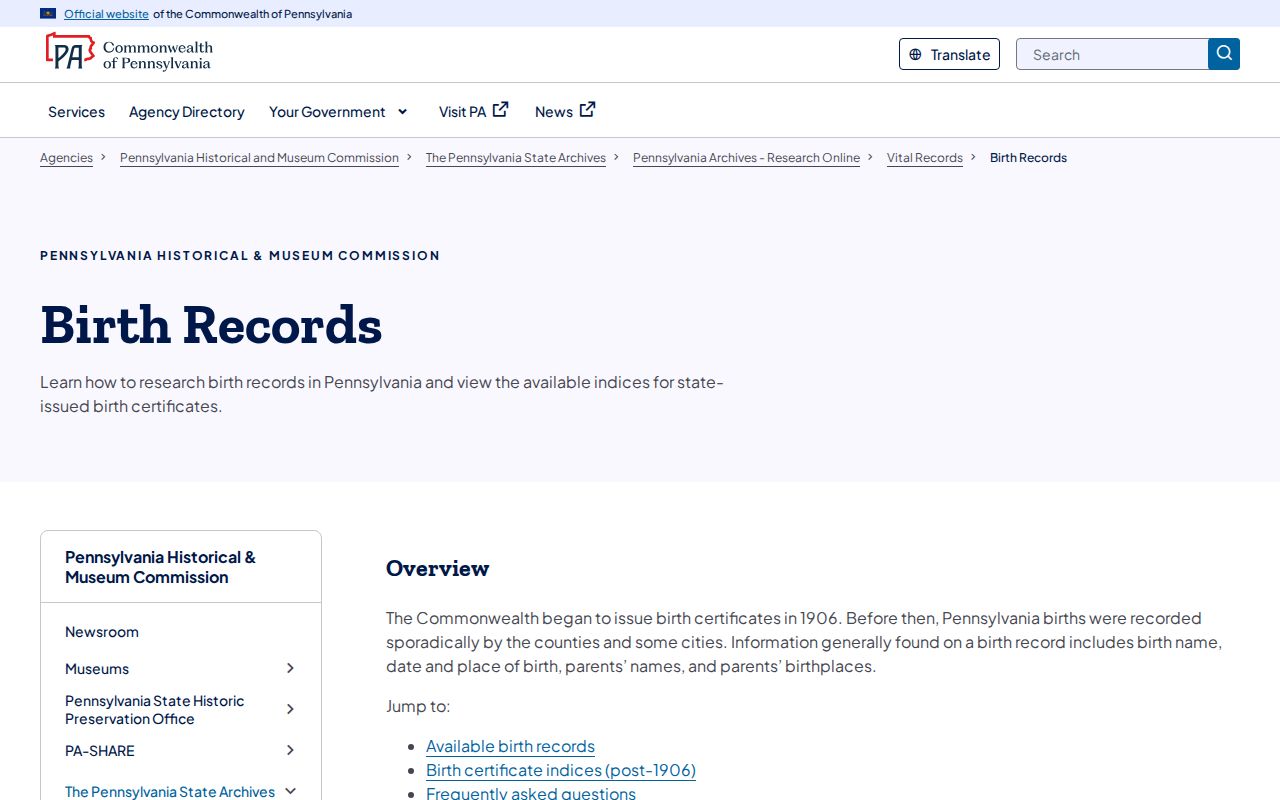
Use an archive index as a lead, then retain the original record citation and ask the keeper whether a certified or research copy is available.
Upper Macungie Library Referrals
Parkland Community Library’s genealogy page adds a nearby catalog and historical-database starting point. It is appropriate when a search needs a librarian referral, a county-history book, or access to a collection such as FamilySearch. Availability and licensing can change, so a current catalog or reference inquiry is better than assuming a database contains a named person or address.
The published genealogy page is the source for the image below. It reinforces the local-library access channel without inventing a township directory collection where the official research found none.
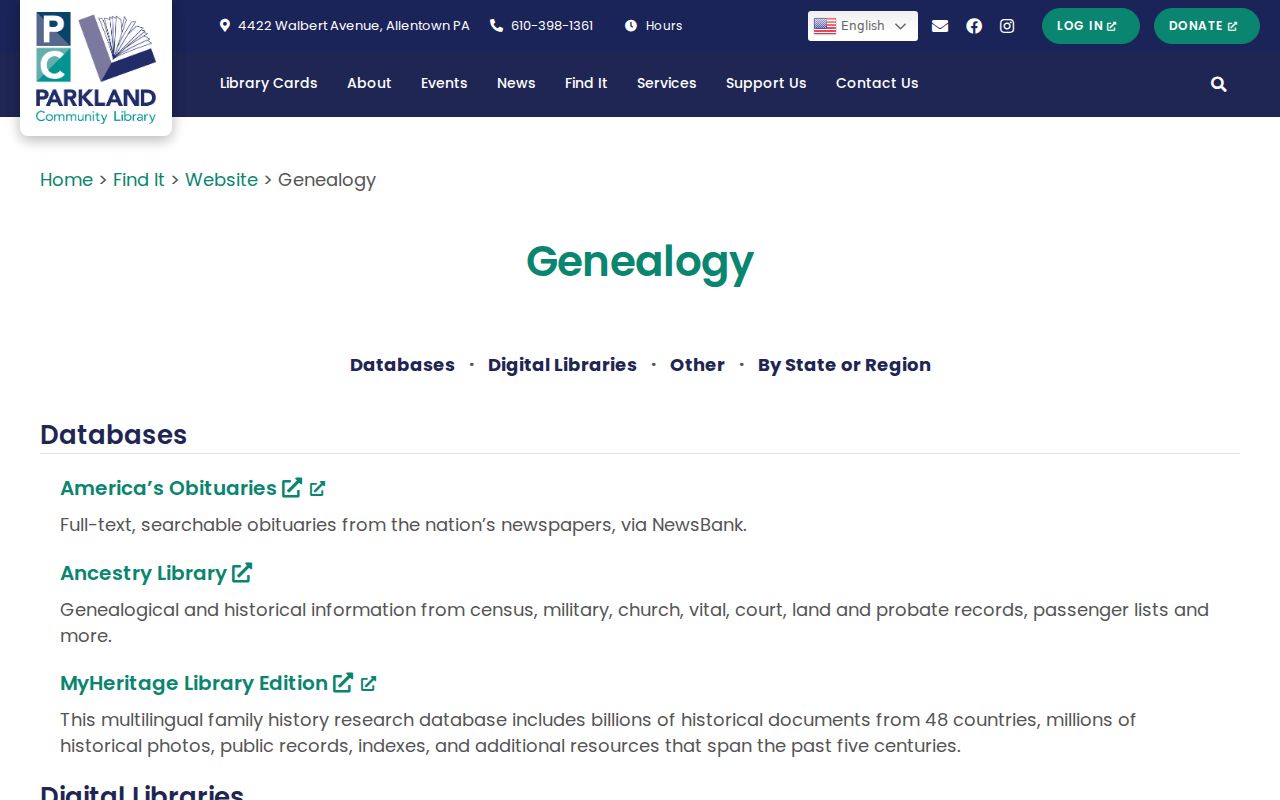
Regional collections work best when their scope is written down at the start. A reference librarian can help identify whether a volume, newspaper, yearbook, or county-history title matches the needed place and era.
Trace Upper Macungie City Directories
Work a household trail from the newest relevant city directory volume backward. Write down the year, page, spelling, address, stated occupation, and each notation. If there is a reverse section, test the street and number, then compare its entry with the alphabetical listing. Pair the observed years with census snapshots, deed or assessment transfers, and newspaper dates rather than filling an unobserved gap with a guessed move.
- Confirm that the directory edition covers the place or address being researched.
- Record the entry exactly, including page, name variant, address, and abbreviation key.
- Check the street section when the edition includes one, then compare it with the alphabetical entry.
- Move one available volume at a time and preserve each address form rather than normalizing the history away.
- Use census, obituary, probate, and county land records to test a move, death, inheritance, or ownership transfer.
A directory finding that needs a modern identity check can be compared with official, current sources through the Upper Macungie resident lookup process. Keep the historical date visible so a past listing is never presented as a current address claim.
Upper Macungie Before 1832
The Township’s history records the split of Upper and Lower Macungie in May 1832. That jurisdictional change is a useful historical quirk: a pre-1832 trail may be indexed under Macungie rather than the later Upper Macungie label. Search the era’s place wording, legal descriptions, neighboring land clues, and county records instead of expecting a modern township name or ZIP in an early source.
Lehigh recorder coverage is stated as beginning in 1812, giving land research a longer backbone than the nearby printed directory shelf. The comparison does not make an early deed a directory entry. It shows why a sound historical trail can cross county land records, postal labels, regional libraries, and Commonwealth archives.
Upper Macungie City Directory Gaps
A missing listing is not proof of a missing household. The collection may exclude a rural route, new subdivision, postal-place variation, or the desired year. The person may have been unlisted, shown under a variant, or outside the directory’s coverage. Start over with the collection’s geography, the street spelling, the date range, and the original directory key before escalating to an archive or county record.
Upper Macungie’s records geography is the important fact. A dated Allentown directory, an APL newspaper index, a Lehigh deed, and a State Archives microfilm roll can all be relevant, but each carries a different scope. The strongest conclusion names the record and its date, and leaves an honest gap where a source does not reach.