
Upper Macungie Township Previous Residents Sources
A house history begins with the record that fixes the parcel, then moves backward through sources with different time coverage. The Lehigh County property and GIS systems supply the current address form and PIN. Recorder indexing supplies recorded transfer parties. Library and archive materials provide historical household context only when their collection geography includes the relevant place. The era table below keeps those paths distinct, which is important in a township that does not have a verified continuous township-only commercial directory series.
| Source | Years it covers | Where held | What it can show |
|---|---|---|---|
| Recorder LANDEX / Russell indexing | 1812-present stated in county FAQ | Lehigh Recorder online or counter | Recorded transfers and a party chain, matched by legal description. |
| Assessment and parcel data | Current, historic cutoff not located | Lehigh ORA and GIS | Starting PIN, situs, and tax-owner or mailing lead. |
| Allentown city directories | 1860-1980 | Allentown Public Library microfilm | Listed people or businesses only where a volume covers the place. |
| Morning Call material | Index 1895-1983; paper 1895-present | Allentown Public Library | Death, address, and community context. |
| Federal census film | 1800-1930 | Allentown Public Library | A dated household snapshot, subject to enumeration coverage. |
| State Archives Lehigh microfilm | Record-specific | PHMC public search room | County record groups and index routes. |
| Township permit files | Dates not centrally published | Upper Macungie Township | Defined project, inspection, or alteration chronology. |
Previous residents research should retain both the record date and the date it was retrieved. A present tax record is a starting lead, not retroactive proof about an earlier household.
Upper Macungie Township Previous Residents Begin With PIN
Before moving backward, save the current site address exactly as the county returns it, along with its PIN and legal description. Street number formats, subdivision names, postal labels, and route spellings can change. The legal description and PIN are the durable bridge between the assessment record, map, and recorded instruments. A parcel’s mailing address can differ from its situs address, so it is useful as a tax-correspondence clue but should not be treated as proof that a named person was present.
The Lehigh ORA property gateway requires at least four characters, rejects special characters, and accepts a 12-digit PIN alone or a PIN plus PAR separated by a space. When an address search is ambiguous, use the returned PIN, then compare the county map’s parcel boundary and MUNI_CODE. That sequence avoids relying on a postal city field or on two similar house numbers that may describe different tracts.
- PIN
- The 12-character Lehigh County parcel identifier used to connect property and land records.
- Legal description
- The recorded land description, which can use lot, plan, acreage, or boundary language instead of a modern street line.
- Situs address
- The physical parcel location carried in county data.
- Mailing address
- The address for tax correspondence, which can differ from the parcel itself.
Trace Upper Macungie Township Past Residents Through Deeds
The recorded deed chain is the strongest backward trail for ownership history. Begin with the latest deed for the PIN or current owner, then preserve the grantor, grantee, recording date, instrument number or book and page, and legal description. In the next step, search the seller from the newer deed as a grantee in an earlier transaction. Match the legal description, plan reference, or parcel details at each link. A familiar surname alone is not enough, especially where an estate, trust, or organization is a party.
- Use ORA and GIS to record the present parcel’s PIN and exact situs string.
- Open the Recorder’s records-search gateway and locate the newest recorded instrument for the parcel or party.
- Save the transfer details and compare the legal description with the current parcel.
- Search the earlier seller as a grantee, then repeat the legal-description comparison for each older transfer.
- When online images or index access are incomplete, ask Recorder staff for the current counter, copy, or index-book route.
A capture of the Lehigh Recorder records-search gateway shows the custodian’s entry point for the deed trail.
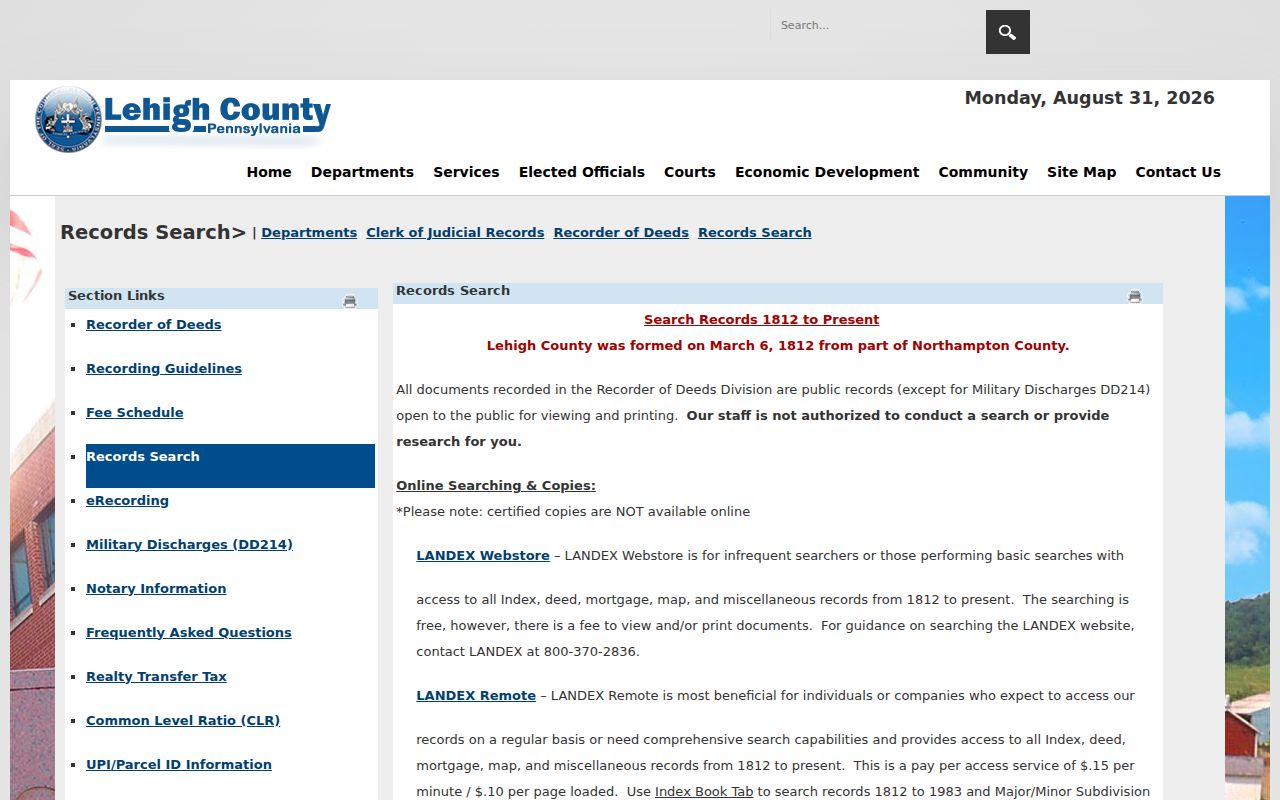
LANDEX coverage is stated as 1812-present in the county FAQ, but the available research does not promise free images, a complete modern street index, or the same screen fields for every period.
Upper Macungie Township Previous Residents Coverage Compared
Recorded land access and regional directory access are useful together because they answer different questions. The county FAQ states LANDEX runs from 1812 to the present. APL’s verified Allentown City Directory run is 1860-1980. Neither date range makes a complete township household record. The long Recorder span can establish a land-transfer trail, while an APL listing needs a volume-by-volume check that the directory actually included the address or postal place.
The Recorder counter is the fallback for access questions. The Pennsylvania State Archives is another fallback when online county searching ends: its Lehigh guide identifies county-office microfilm by record group and roll for public-search-room use. Bring the legal description, time range, and record type. That makes a counter or archive request narrow enough to locate an existing record instead of asking staff to conduct a broad personal search.
Note: A missing directory entry can reflect a collection’s stated geography or its indexing limits, so preserve the volume title, year, page, and search terms before inferring a move.
Upper Macungie Township Previous Residents Permit Context
Township permit and zoning files can date a construction change, inspection sequence, subdivision activity, or defined project. They do not create a public current-household file, and no official public permit-search database was located. The practical route is to identify a parcel or address first, review the township forms and fee material, then request a defined existing permit, inspection, zoning, or code record by address, permit number, and date window.
The township Permit Department uses the permit number and address printed on the permit card for inspection scheduling. Its listed access chain includes forms, the general phone number 610-395-4892, a counter route, and the Pennsylvania Right-to-Know Law request process. A narrow RTKL request should ask for records already held and allow the custodian to redact protected information.
A capture of the Lehigh County marriage department illustrates another county-held event record that can supply a dated family-history lead when the event occurred in Lehigh County.
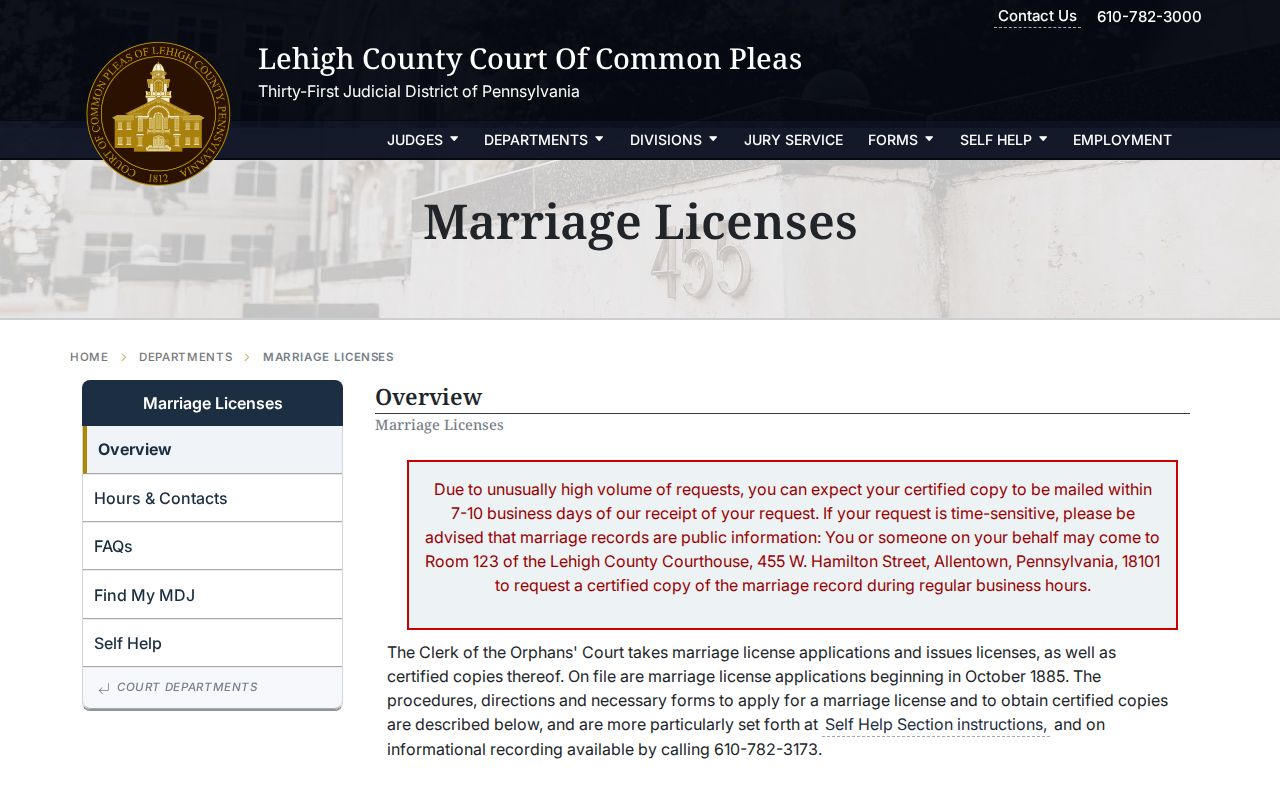
Lehigh marriage applications begin in October 1885. A marriage record is event evidence, not an address list, and certified-copy rules should be checked with the county before a request.
Upper Macungie Township Past Households in Directories
Land ownership is only part of a prior-residents trail. APL holds Allentown City Directories for 1860-1980, a Morning Call Obituaries Index for 1895-1983, Morning Call microfilm from 1895 to the present, and census films from 1800-1930. These regional resources can help with an Upper Macungie address only when the exact directory or census context covers it. Record the title, year, page, street form, name spelling, and any abbreviation key before comparing a listed person with a parcel or deed.
- Start with the newest directory likely to cover the postal place and preserve the volume’s stated scope.
- If a reverse or criss-cross section is present, check the street and number before the alphabetic entry.
- Work backward one available volume at a time, retaining the address as printed.
- Pair the dated listing with a census observation, recorded transfer, newspaper notice, or probate role.
The collections and their access details are described on the Upper Macungie Township city directory page. That page keeps the regional-library geography clear rather than treating an Allentown title as a township-wide directory.
A capture of Pennsylvania vital-records genealogy guidance shows the state route for historical birth and death material.
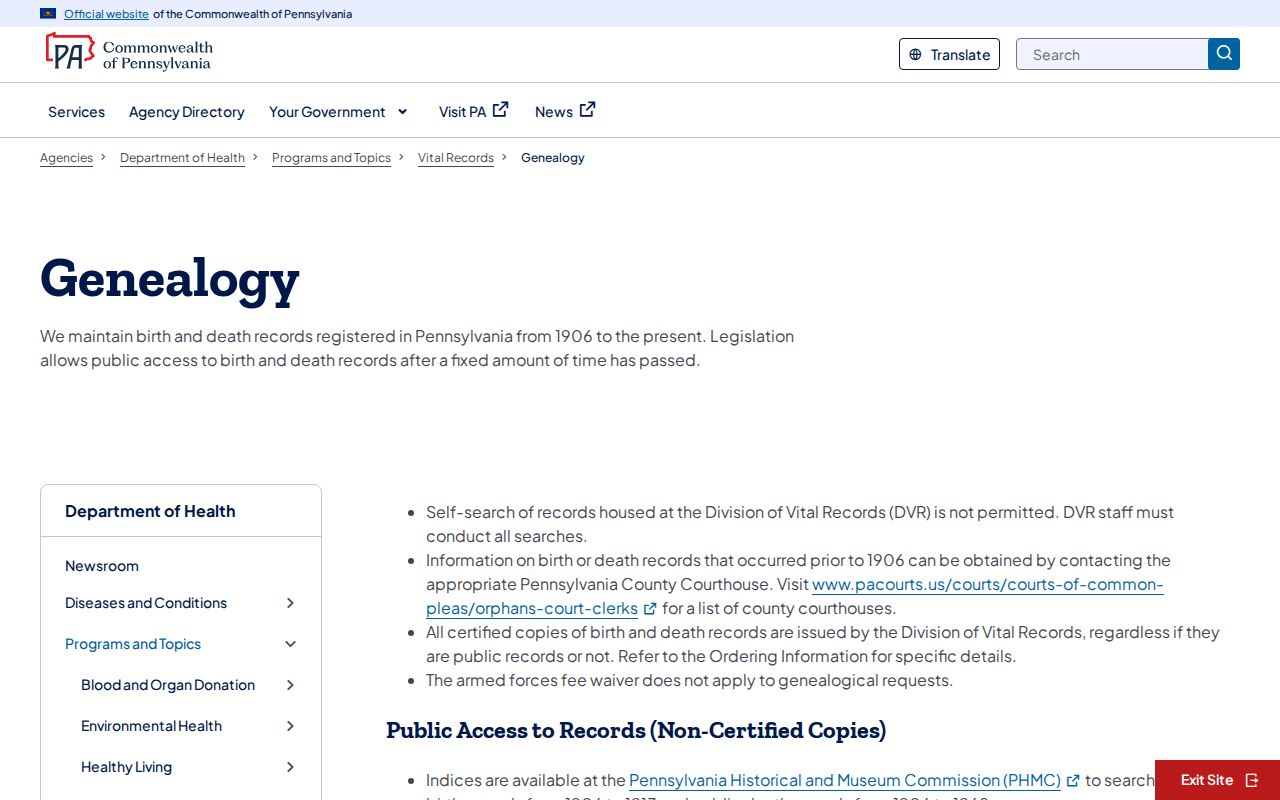
Pennsylvania birth certificates become public at 105 years and death certificates at 50 years. Age and eligibility rules make these historical identifiers, not a substitute for a current address finding.
Upper Macungie Township Previous Residents Indexing Quirk
Upper Macungie split from Lower Macungie in May 1832. Earlier records can therefore use Macungie rather than Upper Macungie as a locality term. This is a real indexing quirk, not evidence that the property moved. For a nineteenth-century question, test both locality terms and use the legal description, acreage, adjoining-land language, plan reference, and recorder details to keep the correct tract in view.
No official source verified a township-wide street-renumbering year or a local records-loss event. When an old address fails, compare historic maps, directory cross references, deed plans, and the county parcel description rather than inventing a replacement address. The research gap itself is useful: it directs a reader to the Recorder, State Archives, or historical repository for the original format.
Upper Macungie Township Previous Residents Estate Endpoints
An obituary, probate file, or executor deed can close or clarify a house-history interval. Start with a dated obituary-index lead, retrieve the original notice from microfilm, then check public estate direction with Lehigh Register of Wills or recorded executor documents. The Register of Wills is part of the Clerk of Judicial Records and is reached at 455 W. Hamilton Street in Allentown; the research lists 610-782-3148 for directions. Each source should be described only as the role it documents, not as proof that every relative lived at the address.
The county Recorder’s Lehigh Record Alert is a free monitoring service for a known property. It can send an email or text notice with parcel number, instrument number, document type, and recording date when a recording is associated with the monitored property.
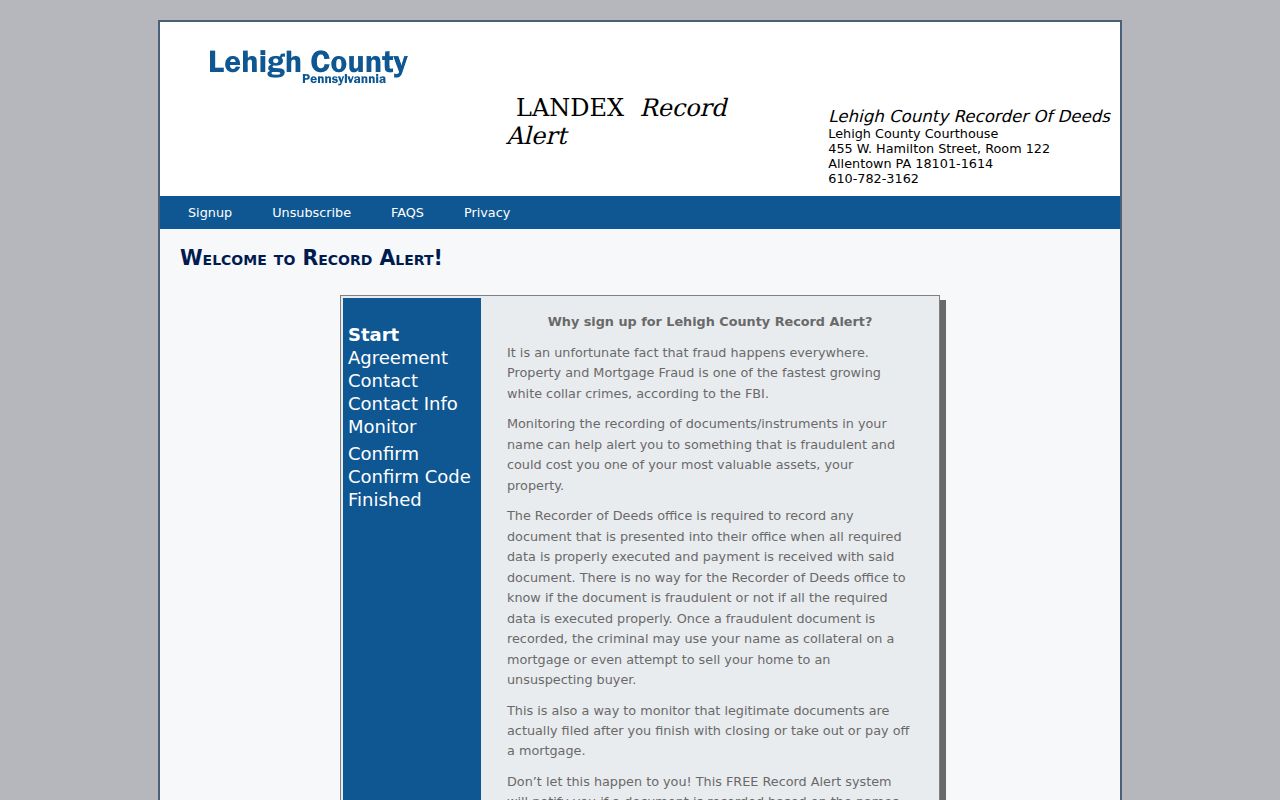
Record Alert is a monitoring aid, not a title examination or a determination that a transfer is valid. Verify any unexpected instrument with the Recorder and qualified advice.
Upper Macungie Township Previous Residents Safety
Address history is best used for family research, estate questions, local history, or curiosity about a parcel. Pennsylvania public records can contain redactions, substitute addresses, sealed material, and timing limits. The right response to a missing record is to ask the custodian about a defined record and access route, not to reconstruct private information from unrelated sources. The Pennsylvania Address Confidentiality Program can provide qualifying participants with a substitute mailing address, so an apparent address mismatch may be deliberate.
A capture of the Pennsylvania Attorney General’s February 2026 deed-fraud warning provides a current caution for property researchers.
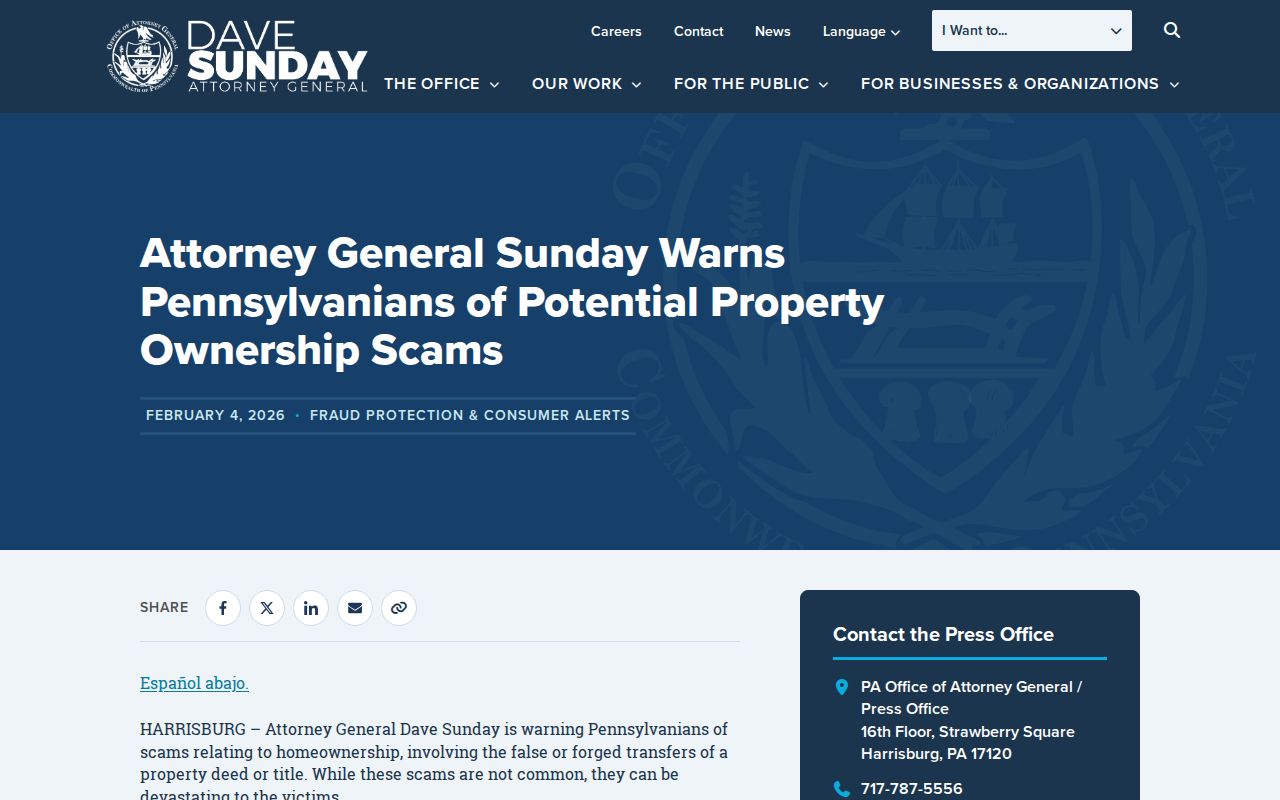
The warning advises against rushing to sign unfamiliar documents and directs consumers to verify a questionable transfer through official channels. Retain an instrument number, date, and parcel information before contacting the Recorder.